Small and medium-sized municipalities share successful experiences in sustainable water management
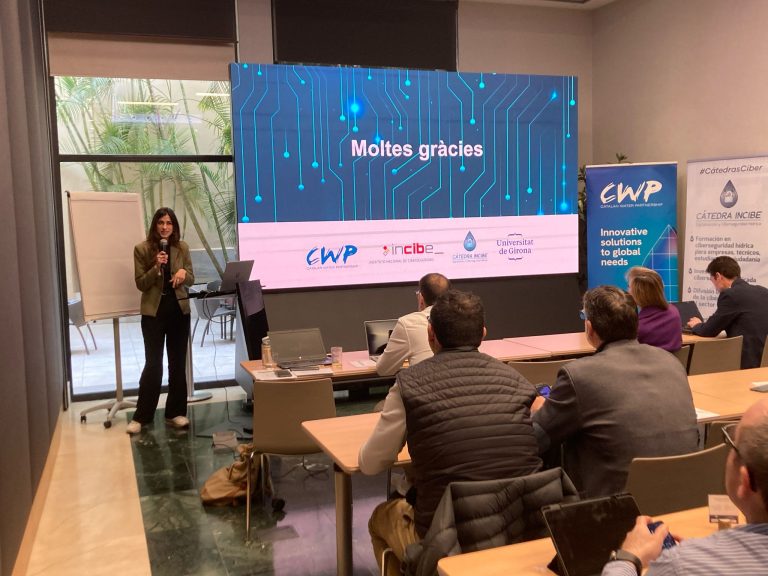
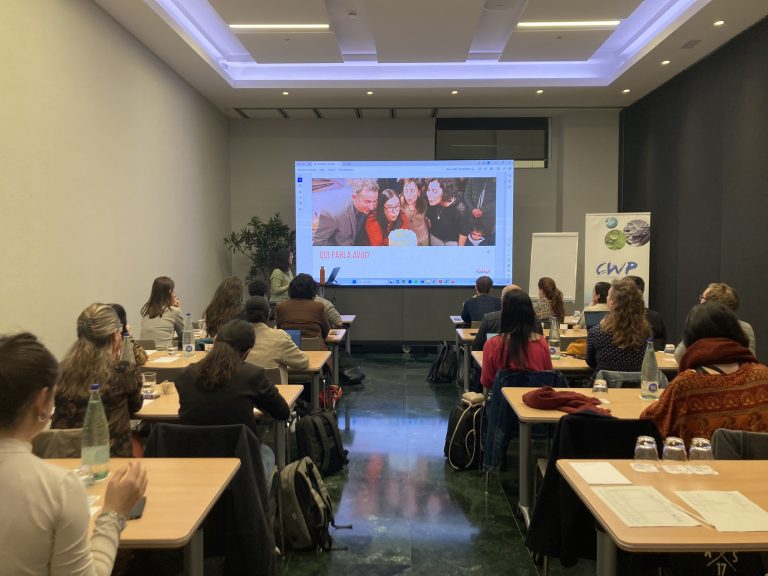
Vilafranca del Penedès, 26 February – This year saw the third edition of the conference organised by the Catalan Water Partnership aimed at municipalities, with the support of Aigües de Vilafranca. It is a space for meeting and exchanging knowledge between professionals in the water sector at a local level which, on this occasion, has focused on water management in small and medium-sized municipalities.
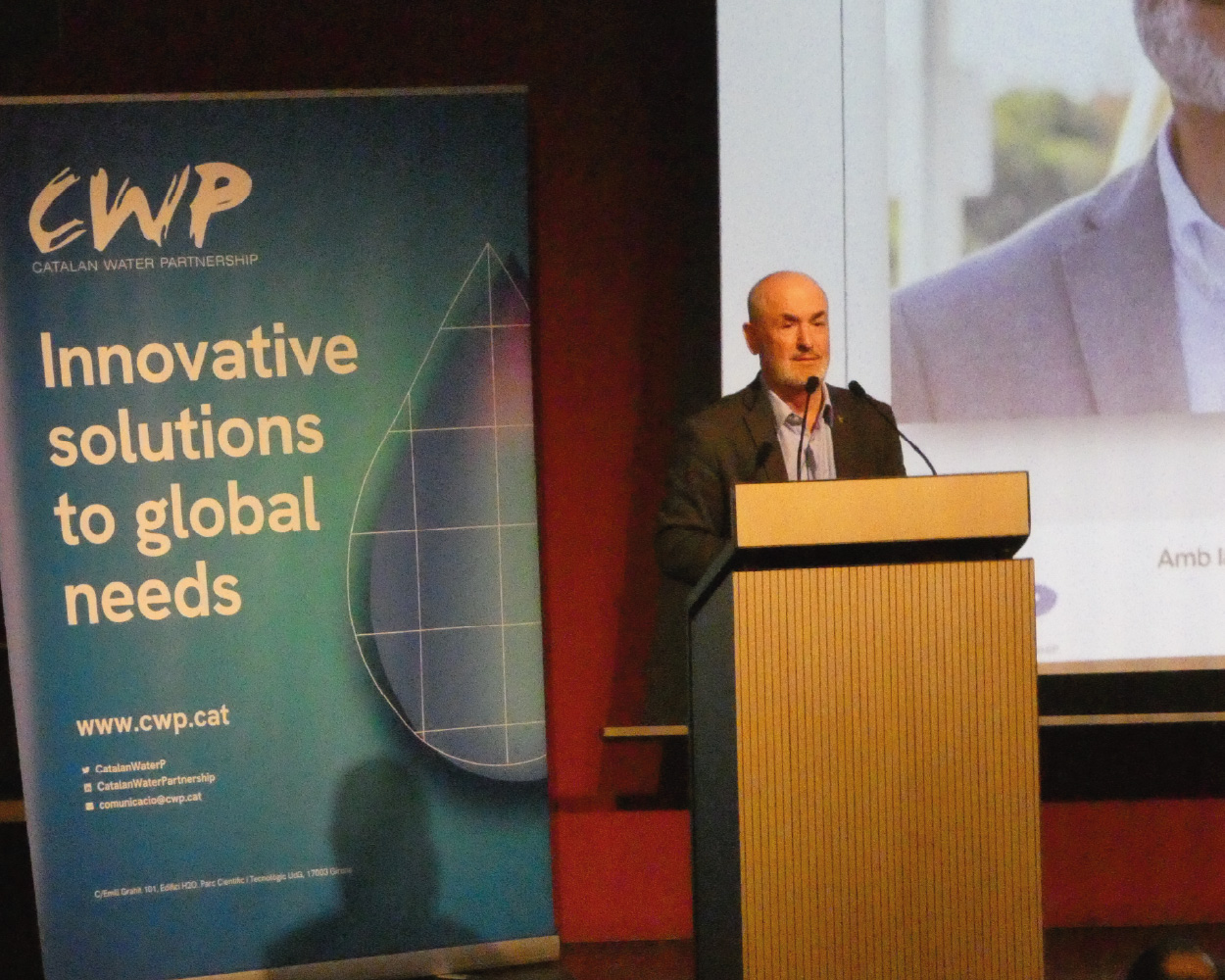
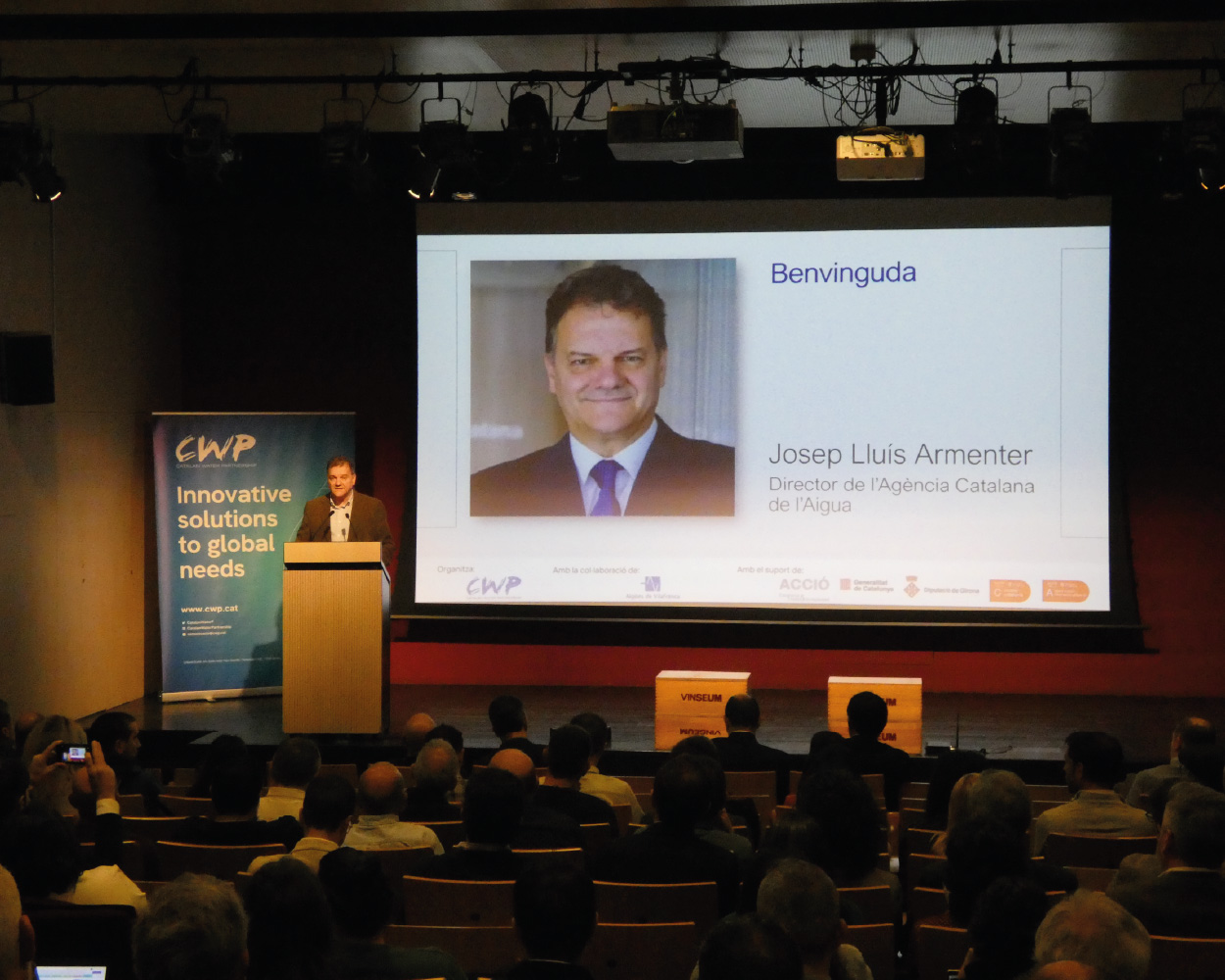
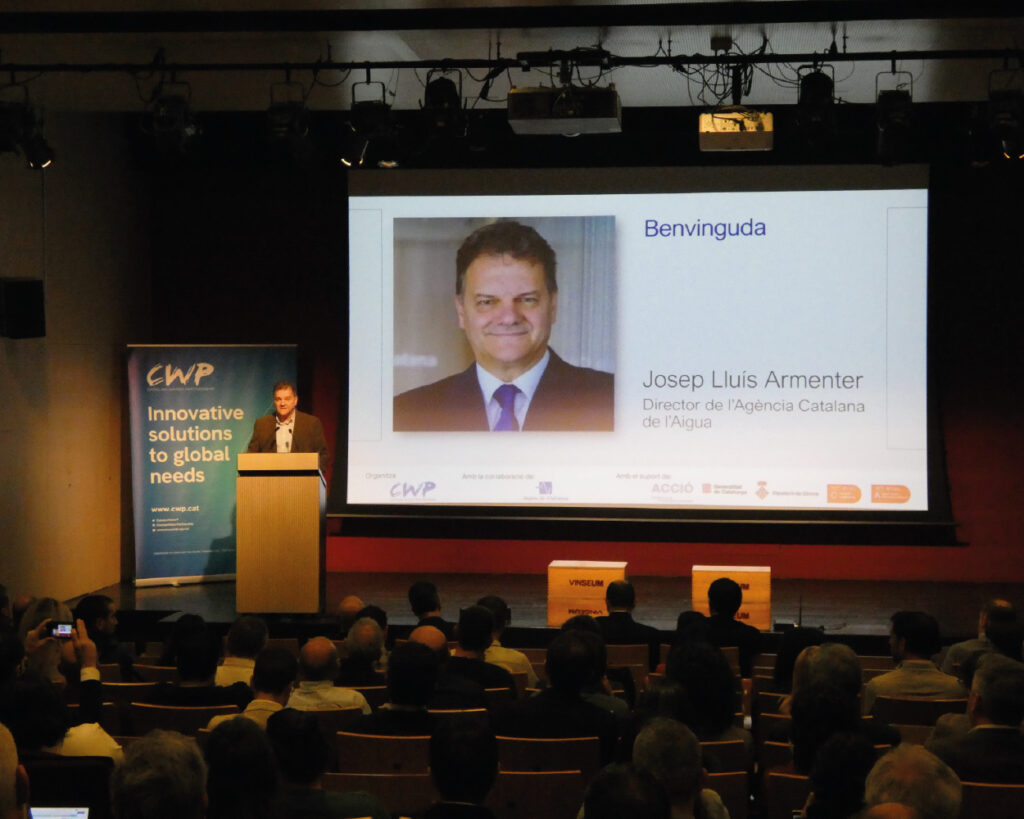
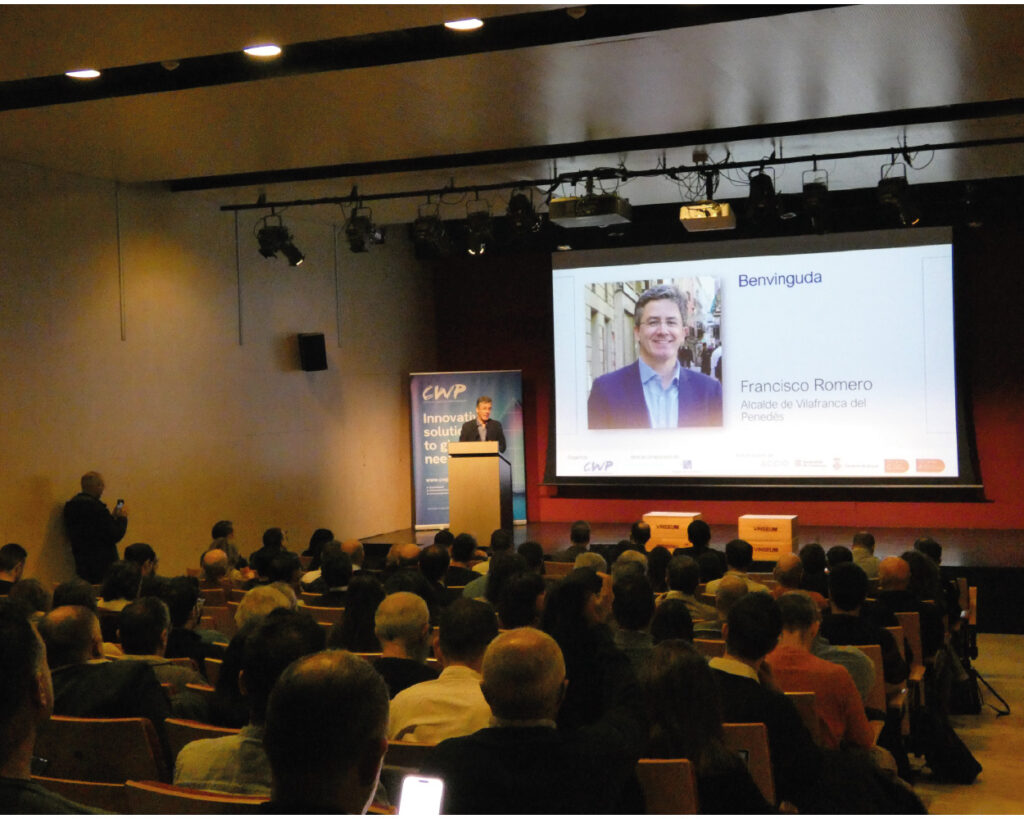
The event was welcomed by Francisco Romero, mayor of Vilafranca del Penedès, who highlighted the improvement of water management as a key element for the quality of life and the transformation of the municipality’s public spaces. Josep Lluís Armenter, director of the Catalan Water Agency, also took part, stressing the importance of shared work between administrations and the sector, stating that “Sharing experiences is essential to move forward. Municipalities need solutions adapted to their context, as well as real knowledge transfer and a collective commitment to move forward“.
Next, the director of the Catalan Water Partnership, Xavier Amores, made the introduction to the conference, where he reviewed the projects and contracts underway and contextualized the focus of this edition. In his speech, he stressed that “From the CWP we wanted to focus this year’s municipal day on small and medium-sized municipalities, which often have enormous challenges in water management, from adaptation to climate change to infrastructure management, and with few resources. We wanted to bring together municipal success stories, innovative projects promoted by the CWP and a space for debate between all the actors“.
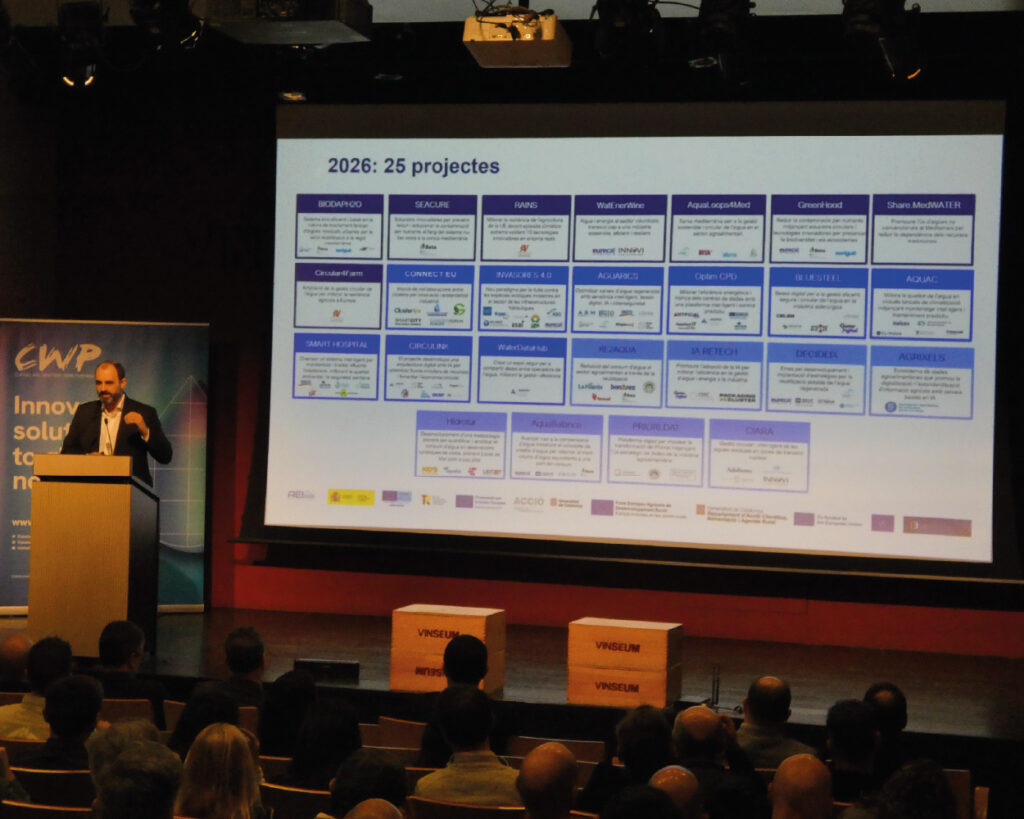
Next, several associated entities have presented initiatives related to water management at the municipal level: WaterDataHub, presented by AVENTEC; Fluent 2.0, presented by BGEO; and Aguarics, presented by Sensotec Group.
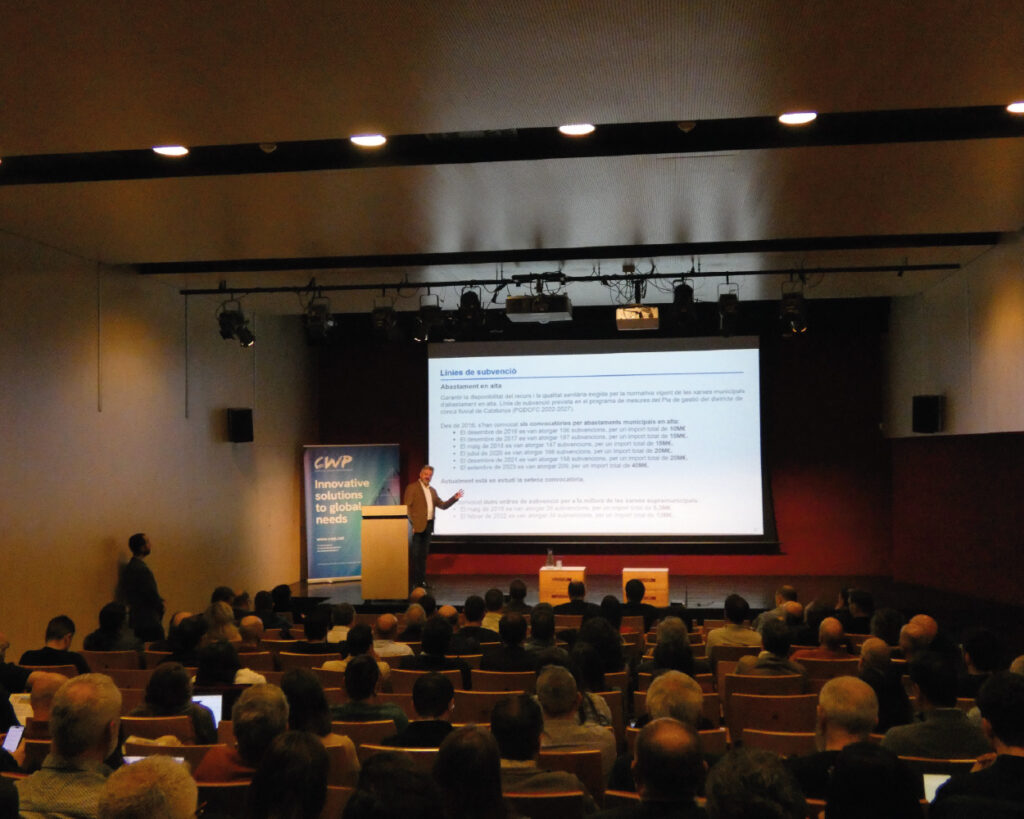
Throughout the session, the initiatives promoted and planned actions by the public administration were also presented with the presentation “Lines of support for supply to the local world”, by Jesús Martínez, head of the Support Unit for Local Authorities of the Supply Area of the Catalan Water Agency.
Subsequently, two blocks have been developed for the presentation of success stories. The first, focused on the efficient management of small-scale infrastructures through innovation, has included experiences from the municipalities of Vacarisses (Aquacenter Group), Banyeres del Penedès (Aigualenc), Talavera (Furrow i Abrys Tech), Calella (Gestió Aigua Calella S.L.) and Abrera (Plasson).
The second block has focused on addressing emerging challenges at the municipal level in terms of water quality and adaptation to climate change, with the cases of Tacoronte (Cofunco), Gestalgar (ACO i EGEVASA) and Sant Pere de Ribes and Sitges (Veolia). From a more transversal perspective, the application of digital twins in water management has also been addressed (Seys) and smart tertiary water management (Energy Improvements).
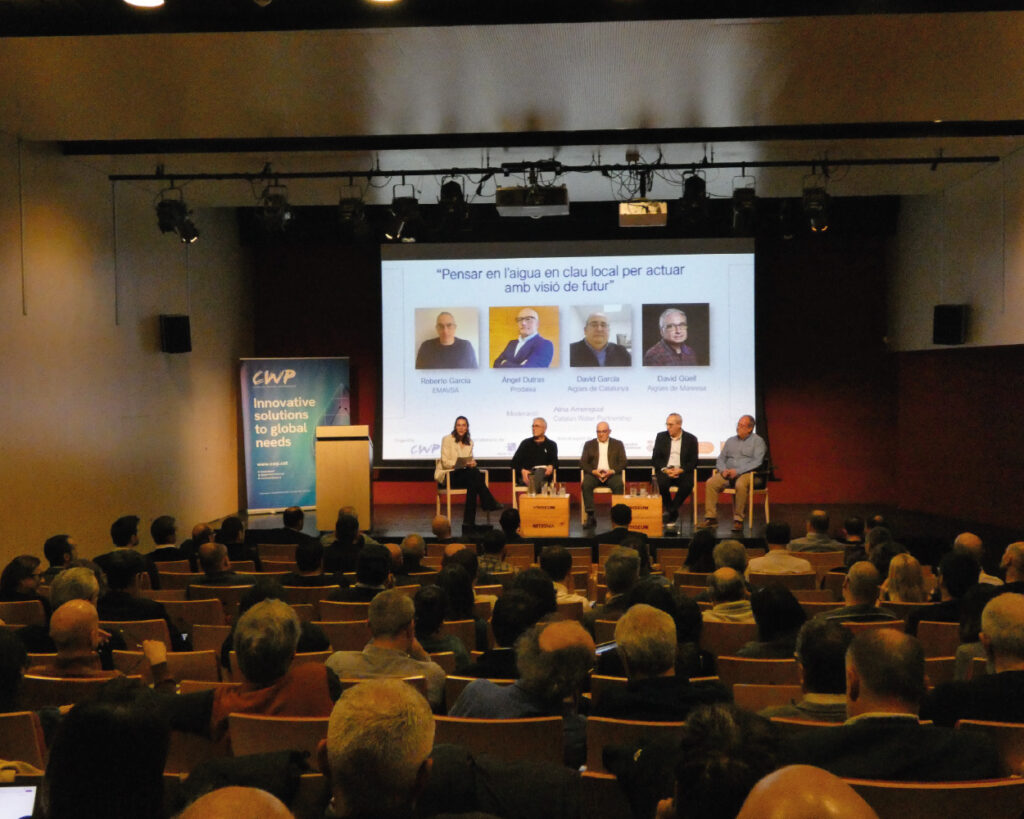
The last block of the day consisted of a round table with representatives of operators under the title “Thinking about water in a local key to act with a vision of the future”, with the participation of EMAVSA, Prodaisa, Aigües de Catalunya and Aigües de Manresa, and moderated by the Catalan Water Partnership.
Among the main conclusions, it has been shown that small and medium-sized municipalities often face economic barriers and a lack of specialized personnel that hinder the modernization of infrastructures and the capacity for innovation. In this context, shared or supra-municipal management models of the service, whether through associations, consortia or operators that provide services to several municipalities, contribute to distributing efforts thanks to economies of scale and facilitate access to technical knowledge and innovation. The need to rationalise the use of water and to integrate it structurally into country strategies has also been highlighted.
The participants agreed to highlight the importance of the human factor in the management of the service, as an element that complements and gives meaning to technology. Finally, it has been stressed that it is necessary to adjust the economic effort to the quality really required in each use, since using water with a higher quality than necessary can entail a very high and inefficient expense.
The day ended with the closing of the president of EMAVSA, Ramon Zaballa, who highlighted the fundamental role of the human team in the management of the service and the need to bet on a transversal vision of urban planning and works in the city, integrating water as a central element in planning. Zaballa also stressed that water operators must assume a key role in raising public awareness, both in relation to the impacts of climate change and the real value and cost of the service.