The municipal world between floods and drought: challenges and solutions for managing extreme climate events
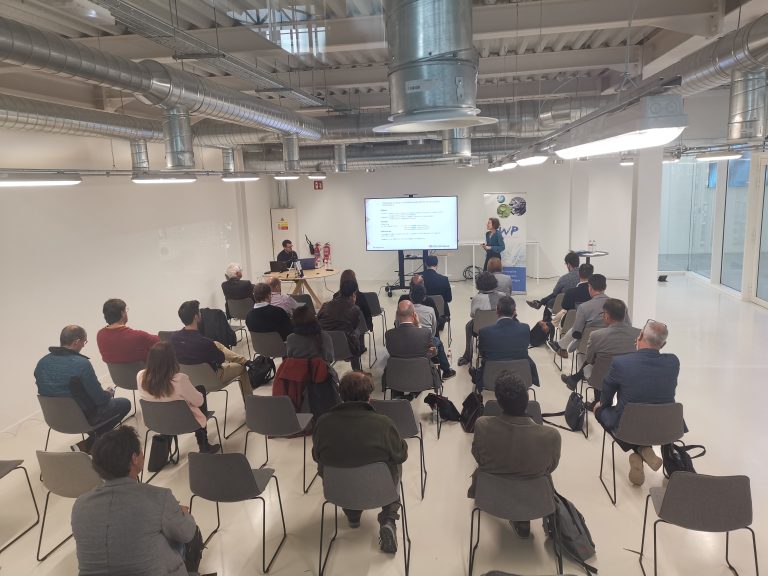
On February 4th, the conference “The municipal world between floods and drought: challenges and solutions for managing extreme climate events” was held in Lloret de Mar, organized by the Catalan Water Partnership (CWP). The event brought together 150 participants, including representatives from public administrations, water sector companies, and academic experts, to address the challenges municipalities face in the context of extreme climate events such as prolonged droughts and floods.
The session began with institutional welcomes from Jordi Aguilera, Vice President of CWP; Concha Zorrilla, Director General for Water Transition of the Government of Catalonia; and Adrià Lamelas, Mayor of Lloret de Mar. Xavier Amores, Director of CWP, introduced the event by highlighting the importance of cross-sector collaboration to strengthen municipalities’ resilience against climate change.
The program included keynote presentations from experts such as Félix Francés, Professor of Hydraulic Engineering at the Polytechnic University of Valencia, who analyzed the lessons learned from the DANA storm that struck Valencia last autumn. This event was particularly devastating due to a combination of factors: very intense rainfall at the headwaters, short ravines with slope changes, absence of rain in the lower areas leading to a false sense of security, a historic flood with a return period of 2000–5000 years, and a warning system that failed, among others. His presentation also introduced the audience to key concepts in flood management, such as hazard (frequency and magnitude of flooding) and risk (the combination of vulnerability and exposure with hazard).
Looking ahead, he stressed the need to reduce flood risk through measures in upstream areas, the creation of green corridors and designated flood zones, improving risk knowledge through technology and updated studies, revising the infrastructure plan and implementing prevention systems tailored to territories, rebuilding while leaving space for rivers, and improving alert protocols and public awareness.

Anna Ribas, Professor of Human Geography at the University of Girona, addressed how municipalities are adapting to floods, sharing lessons learned five years after Storm Gloria, which severely affected municipal facilities, infrastructure, and public spaces, while also highlighting the ability of municipalities to recover quickly. She also presented various adaptation measures that need to be tailored to each specific situation and territory, with a particular emphasis on nature-based solutions, among others.
Diego Moxó, Director of the Territorial Management Area at the Catalan Water Agency (ACA), shared ACA’s work lines to protect against floods and repair subsequent damages, with special emphasis on new initiatives launched after last autumn’s events and the strengthening of others, such as riverbed maintenance and the updating of flood zone mapping, among others.

Innovative solutions for flood prevention and management at the municipal level were also presented, developed by companies specialized in early warning technologies, resilient urban planning, satellite data use, flood risk management, sustainable urban drainage systems (SUDS), and governance measures. Speakers included representatives from ADASA, IsardSAT, Earthpulse, ABM, HYDS, ACO, HidrojING and the Centre Tecnològic BETA.
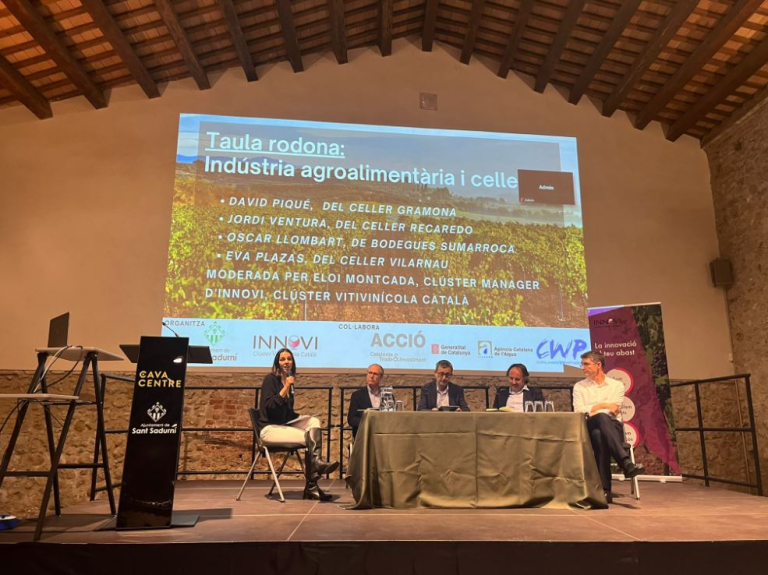
In the final part of the conference, the round table “The municipal sector between floods and drought: challenges and strategies from the water sector”, moderated by Xavier Amores and featuring Raquel Compta (Aigües de Mataró), Josep Descamps (Agbar), Guillem Treserra (Aigües de Vic) and Lluís Sala (Consorci Aigües Costa Brava), provided an opportunity to discuss the past, present, and future of managing extreme climate events such as droughts and floods. The panelists agreed on the need to integrate innovative technologies and sustainable management strategies, and to learn from past events by carrying out the necessary investments and actions to face future water challenges.
The event highlighted the importance of proactive and resilient municipal water management in the context of climate change, with a particular focus on planning and prevention, the use of advanced technologies, and collaboration between institutions and companies, in order to build better-prepared and more sustainable municipalities.