“Water transition in sectors and economic activities”: the roadmap for a feasible and sustainable water transition
On April 10th, the report “Water Transition in Sectors and Economic Activities” was presented by the Barcelona Chamber of Commerce within the framework of the Water Transition Observatory and with the support of the Catalan Water Partnership in its preparation. The study was carried out during 2024 and part of 2025, a period marked by drought and restrictions on water use, based on data provided by the Catalan Water Agency and interviews with various stakeholders from the water sector and the ten economic sectors analyzed. Josep Santacreu, president of the Barcelona Chamber of Commerce, pointed out during the presentation event that, despite the recent increase in reservoir levels, “the same mistake must not be repeated”, referring to the 2007–2008 drought, when, once it ended, investments in water cycle infrastructures were abandoned and necessary measures were deprioritized. He emphasized the importance of supporting companies in adapting to climate change and future droughts.
The aim of the study was to analyze water demand across industrial and service economic activities using available data, noting that although 100% of consumption could not yet be characterized, the study provides an initial overview of a significant share, its evolution, and distribution among sectors. Key findings include that companies need better guidance, more support, and stronger incentives for investments in water transition, similar to what has been done for years in the energy sector. It also encourages businesses to continue improving their water-use efficiency to become more resilient in future contexts of water scarcity. This will be possible if investments are facilitated, projects are prioritized, and innovative actions in sustainable water management are promoted. In this regard, the Chamber estimates that €390M in incentives over 5 years are needed to support companies in the water transition, with public administrations also prioritizing demand-side support. This includes creating water transition offices, increasing support for water audits, greater investment in R&D and water digitalization for economic sectors, and significant investments to help companies modernize processes and water management in their facilities, with a focus on small and medium-sized enterprises.
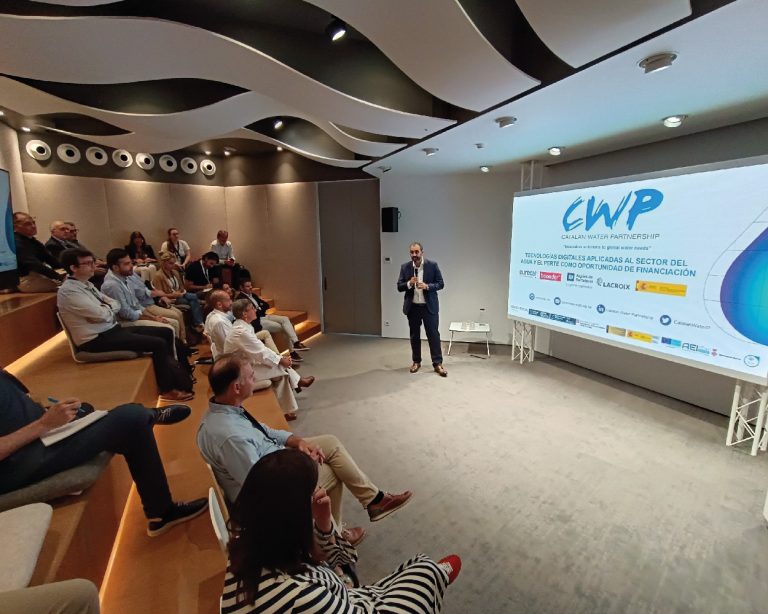
The presentation event included opening remarks by Josep Santacreu (President of the Barcelona Chamber of Commerce), Oriol Alcoba (General Director of Industry of the Government of Catalonia), and Concha Zorrilla (General Director of Water Transition of the Government of Catalonia), who highlighted the importance of addressing water demand and the economic impact of drought on many companies. The Director General of Industry referred to last year’s Catalan Water Partnership study on 24 successful cases of water management as a precedent to this report. Alicia Casart, Director of Infrastructure Studies at the Chamber of Commerce of Barcelona, presented the study, highlighting its objectives, conclusions, and proposals for a ten-year water transition plan agreed upon by all stakeholders.
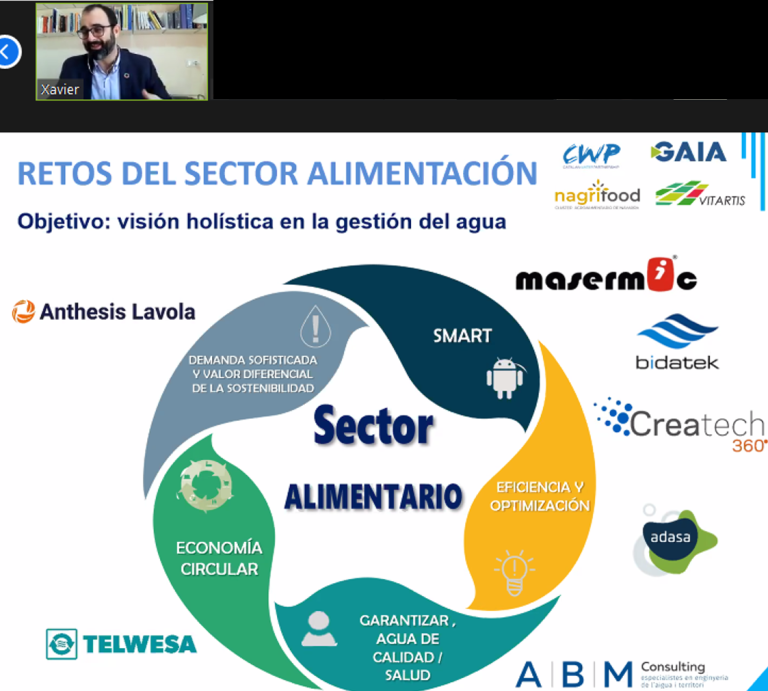
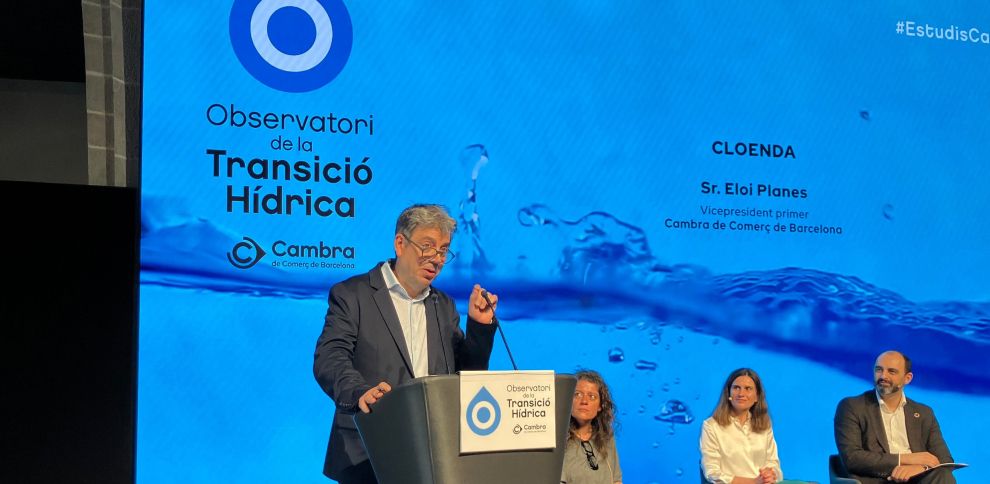
Before closing, the round table “Challenges and Assets of the Water Transition – Economic Sector Perspectives” was held, moderated by Xavier Amores, director of the CWP and lead of the study. Panelists included Núria Mallen (Família Torres), Marta Font (Coca-Cola Europacific Partners), Marc Fargas (AITASA), and Laura Pérez (Hotel Samba). The discussion highlighted the participation of more than 60 experts, sector associations, and academics, and the identification of successful cases across all sectors, many of which have been working for years on water savings, reuse, and integrating water transition into their strategies. These four were presented as outstanding examples. Finally, Eloi Planes, First Vice-President of the Barcelona Chamber of Commerce and Executive President of Fluidra, closed the event by stressing that Catalonia has the opportunity to lead technologically and economically a growth strategy in economic sectors by achieving greater efficiency in water use.
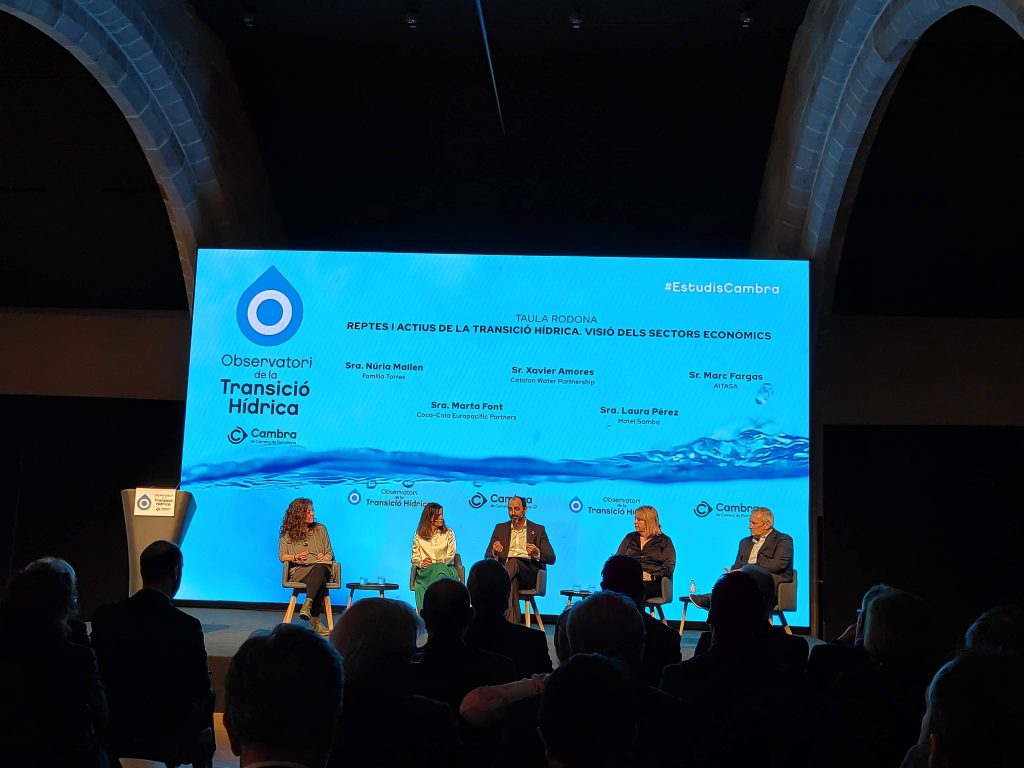
Round table “Challenges and assets of the water transition – perspectives from economic sectors”
Water Transition Observatory
The goal of the Water Transition Observatory (WTO) is clear: to position Catalan companies as global leaders (particularly in the Mediterranean) in managing water emergency situations and driving the transition to new models. It seeks to build proposals addressing both water resources and water consumption, pointing toward an action plan to ensure a feasible and sustainable transition. The Observatory was created by the Barcelona Chamber of Commerce and is led by its First Vice-President, Eloi Planes. Members include Alicia Casart and Narcís Bosch (Chamber of Commerce and Consell General de Cambres), as well as experts David Tapias, Carlos Campos, and Xavier Amores (director of the Catalan Water Partnership). The WTO also has an advisory council including prominent academics in the water field across Spain, among them representatives from cluster member organizations: Eurecat (Miquel Rovira), Universitat de Girona (Anna Ribas), Universitat Politècnica de Catalunya (Rafael Mujeriego), Centre Tecnològic BETA – UVIC (Sergio Ponsá), ICRA (Maite Pijuan) i la Universitat de Barcelona (Montserrat Termes).