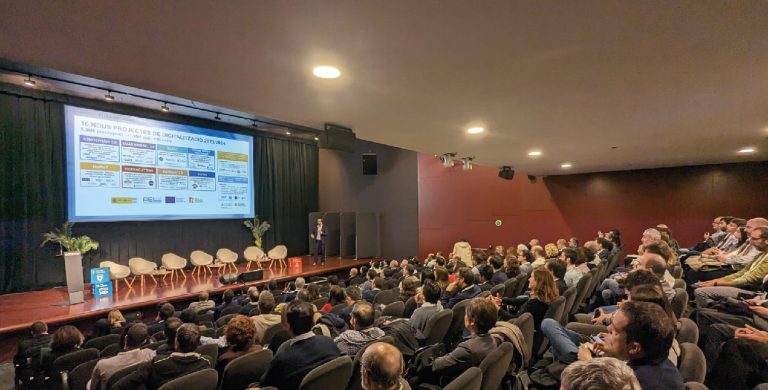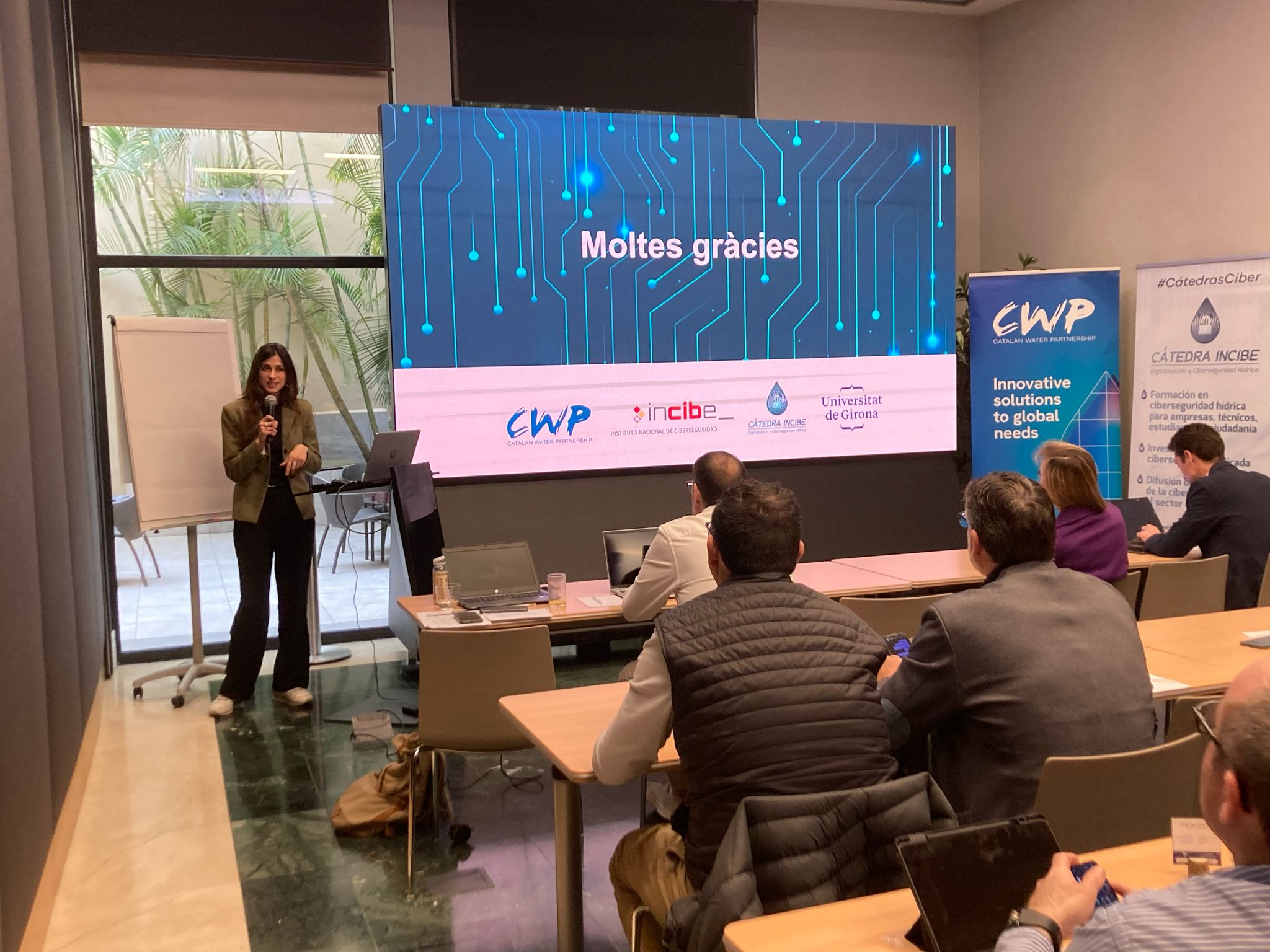
The INCIBE Chair on Water Digitalization and Cybersecurity at the University of Girona (UdG) organizes the workshop on cybersecurity applied to the urban water cycle.
The workshop designed for urban water cycle professionals served to share strategies for protecting critical infrastructures.
The National Cybersecurity Institute (INCIBE), an entity under the Ministry for Digital Transformation, and the INCIBE Chair on Water Digitalization and Cybersecurity at the University of Girona held the Workshop on Cybersecurity Applied to the Urban Water Cycle on April 9th.
The activity is part of the agreement between INCIBE and the University of Girona entitled “INCIBE Chair on Water Digitalization and Cybersecurity”, included in the Cybersecurity Chairs Program in Spain, within the framework of the Recovery, Transformation and Resilience Plan, and funded by the Next Generation-EU funds. The event brought together water sector professionals interested in how the digitalization of the sector is leading to an increase in cybersecurity-related risks.
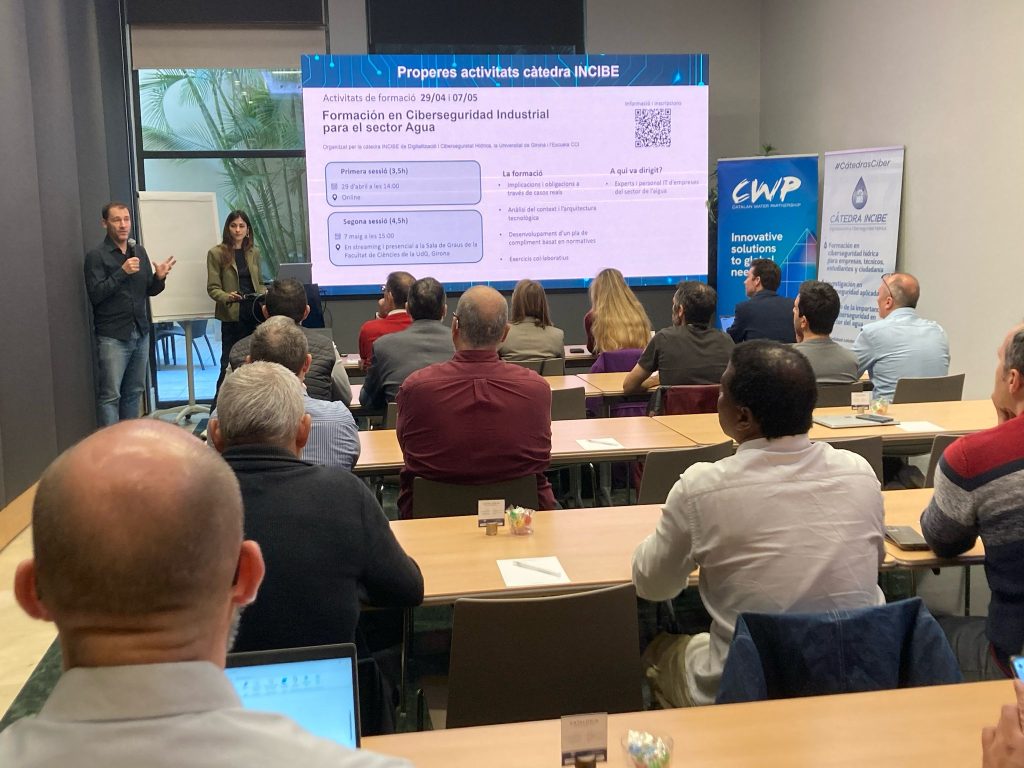
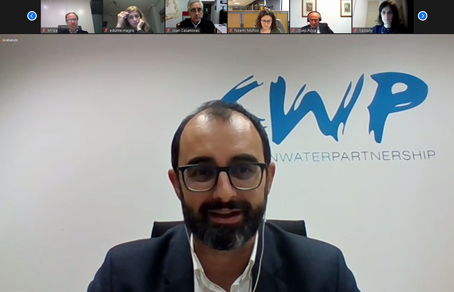
Ignasi Rodríguez Roda, professor at the University of Girona (UdG), and Lide Jaurrieta, project manager at CWP
The workshop aimed to provide participants with knowledge and information on how to maintain the operational security of critical infrastructures in the current context. Through the expertise of the speakers, the session covered the fundamentals of cybersecurity applied to the water sector, relevant regulations, major digital threats and vulnerabilities in critical infrastructures, as well as strategies and tools to prevent and respond to cyberattacks.
The event was divided into two sections. The first, more technical and conceptual, featured contributions from Laura Arantegui, PhD in Criminology and research technician at the INCIBE Chair on Water Digitalization and Cybersecurity at the University of Girona. Arantegui explained the NIS2 Directive ((EU) 2022/2555), as well as the opinions and perceptions of professionals regarding water cybersecurity management. Next, Maria Torrecillas, Head of the Technical and Product Marketing Department at Lacroix, presented the impacts of cybersecurity regulations on the water sector and digital technology manufacturers. Juan Caubet, Director of the IT&OT Security Research Area at Eurecat, introduced the diagnostic methodology for cybersecurity applied to the sector’s critical infrastructures. To close the first part, Fortià Bassas, IT-OT Manager at Spin, presented measures for implementing cybersecurity systems in companies within the water sector.
The second part of the workshop focused on presenting experiences and practical cases of cybersecurity in the water sector. First, Jordi Viñas, Head of IT at Depuradores d’Osona, presented the entity’s experience. Then, Fortià Bassas spoke again to explain the implementation of protocols and security measures at the SSWDP Southern Seawater Desalination Plant in Binningup (Perth).
The workshop highlighted a topic of growing interest within the sector due to the risks it entails. At the same time, it was emphasized that through training, knowledge acquisition, and the sharing of challenges and solutions, it is possible to address these risks and adequately protect critical infrastructures.