The CWP and the IDAEA-CSIC present the latest advances in the digital control of pollutants in water bodies
- Experts from the public and private sectors agree on the key role of AI in improving water monitoring
- Digitalisation is advancing, but research centres warn of the need for reliable data and expert analysis
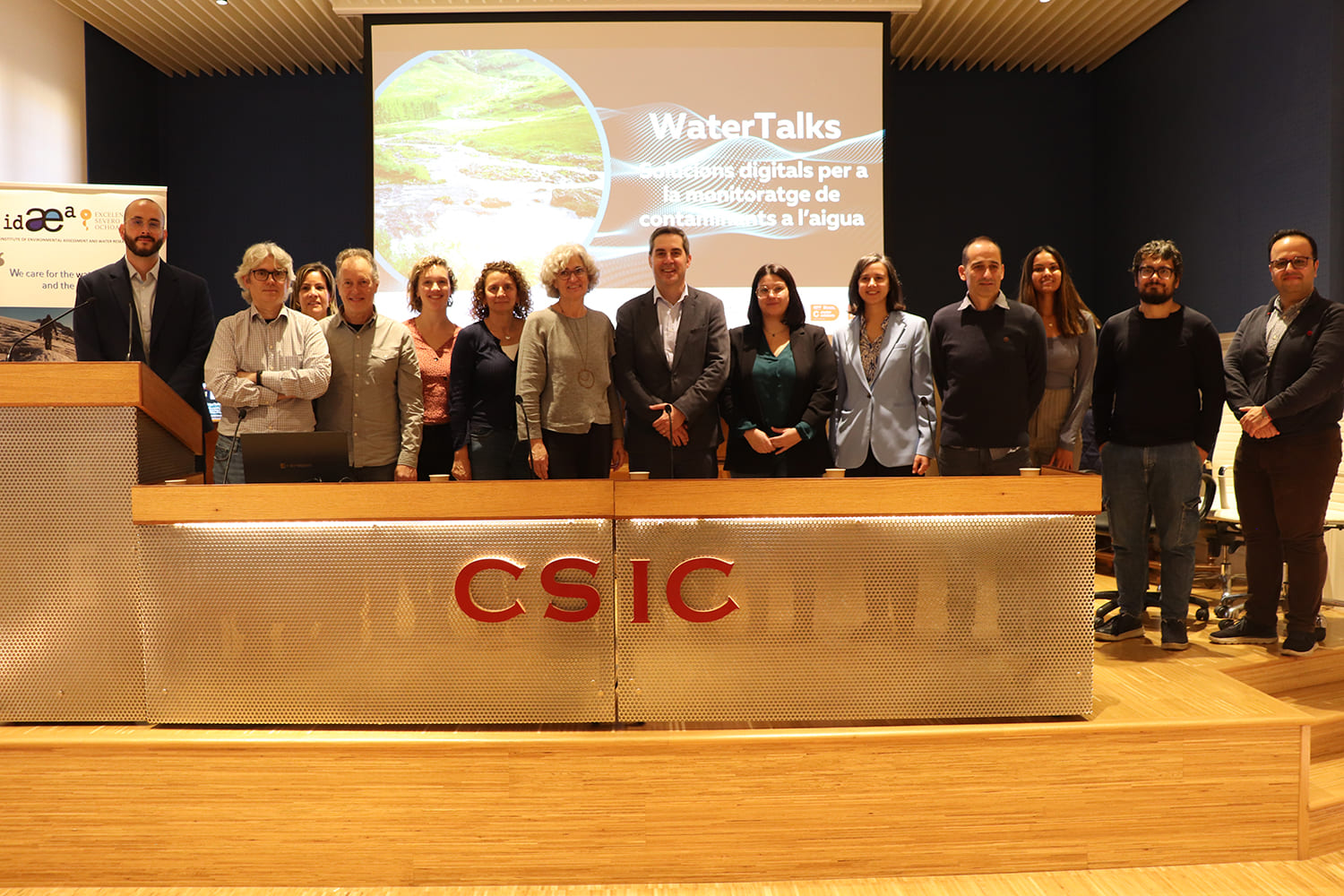
Barcelona, 19 November – On 18 November, the Catalan Water Partnership (CWP) and the Institute for Environmental Diagnosis and Water Studies (IDAEA–CSIC) hosted a new edition of the Watertalks, the conference that the CWP organises together with knowledge centres and universities associated with the cluster to promote knowledge transfer. On this occasion, the session aimed to present and discuss the latest advances in the monitoring of pollutants in water bodies using digital technologies.
The day began with an institutional welcome by Ethel Eljarrat, director of IDAEA-CSIC, who highlighted the importance of promoting collaboration between companies and research. Next, Enric Vázquez, hydrogeologist and deputy director of IDAEA-CSIC, in the opening presentation, stressed that digital technologies, such as AI and advanced remote sensing, among others, once correctly integrated into hydrogeological science and with a sustainable management approach, will allow progress towards more sustainable, safe and resilient water management.
Different experts from research centers and business presented R+D projects and practical application cases. Juan José Hidalgo (IDAEA-CSIC) explained the use of artificial intelligence in hydrogeological modelling. For his part, Oriol Gutiérrez (ICRA) explained how the 4SM project developed digital and sustainable solutions for the advanced management of urban sanitation, and recalled that it is necessary to combine preventive and reactive solutions to face the challenges of the network. Ester Aguilera (Amphos21) delved into the use of visual sensors to predict pollutants in water. To close the block, Montserrat Batlle (ADASA) presented digital solutions for microbiological control aimed at the measurement and prediction of E. coli.
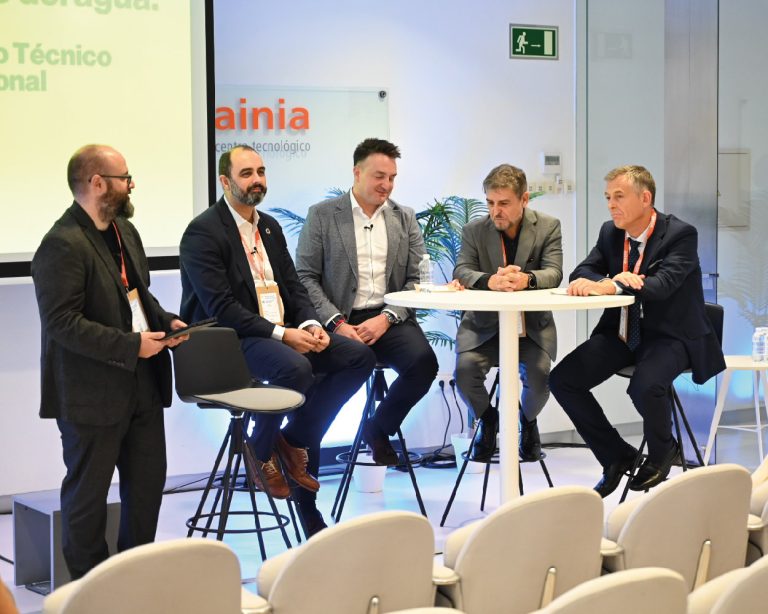
The conference also included a round table that opened a space for debate on the challenges and opportunities offered by digitalisation in pollutant monitoring. Sandra Pérez (IDAEA-CSIC), Núria López (University of Barcelona – IDRA), Fran Martín (Earthpulse), Jordi Raich (Badger Meter Spain) and, as moderator, Lucia Gusmaroli (Catalan Water Partnership). During the round table, good practices in collaboration between companies and knowledge centres, examples of innovative projects, considerations on the advent of AI applied to environmental analyses and the importance of complementarity between digital solutions and laboratory analyses were shared.
The essential role of public centers in providing reliable and quality data was highlighted, as well as the need to understand and adapt to the needs of the end user so that digitalisation is truly useful. Current challenges such as detecting pollutants at very low concentrations, linking macro and micropollutant data or advancing in the continuous monitoring of compounds such as PFAS were also discussed. Finally, on the role of AI, the speakers agreed that it is a complementary tool that should never replace expert knowledge or informed decision-making.
With more than 70 attendees, this new edition of the Watertalks has contributed to strengthening the links between research and business, favouring the transfer of knowledge in an emerging field such as technologies applied to the detection of pollutants.