The SEACURE project understands, improves, and innovates in nutrient management, for the health of the Mediterranean basin and its inhabitants.
Nutrient pollution, especially due to the excess of nitrogen (N) and phosphorus (P), represents a major challenge in the Mediterranean basin, with severe consequences for water quality, soil health, and biodiversity. It can lead to the eutrophication of aquatic ecosystems, oxygen depletion, and contamination of aquifers, affecting both ecosystem health and drinking water supply. Moreover, it impacts soil fertility and contributes to its degradation. This phenomenon is aggravated by intensive agriculture, soil erosion, increasing urbanization, industrial activities, and climate change. However, it also represents an opportunity to foster innovative technologies that can improve water quality, soil health, and biodiversity.
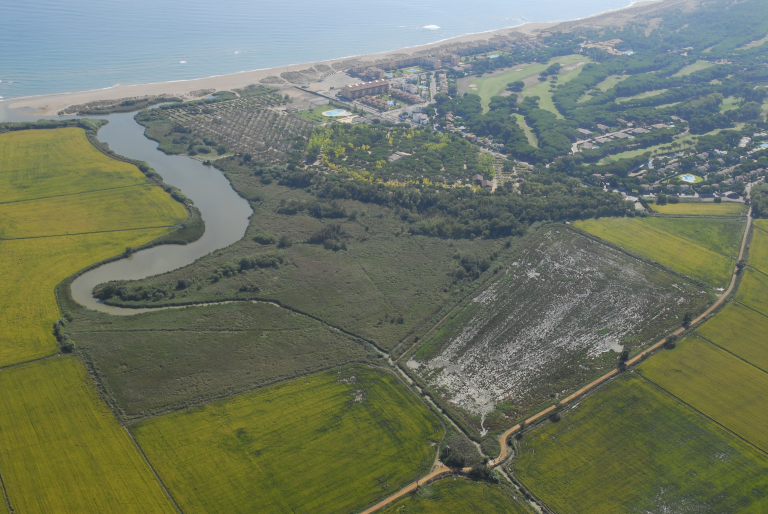
In this context, the SEACURE project, led by the Beta Technological Centre at the University of Vic, seeks to address this issue in the Mediterranean basin through an integrated soil-river-sea system approach across six European regions, fostering cooperation and knowledge transfer: the Axios river delta and the Thessaly plain in Greece, the Po delta and the Esino river in Italy, and the Mar Menor and Central Catalonia in Spain. The project’s goal is to create strategies to prevent, reduce, and reverse excess nutrients in water and soils by combining the implementation of technological, social, and governance innovations. SEACURE focuses on empowering key stakeholders such as farmers, managers, and citizens to generate long-term impact on nutrient pollution management throughout its entire cycle, from the source to the sea.
On March 27th and 28th, SEACURE project partners met in person in Brussels in a key meeting to share progress and strengthen coordination among the participating entities. The meeting served to present the project’s current activities, share preliminary results, identify synergies, and define the next steps. One of the main highlights of the meeting was presenting the advances in pilot projects and innovative solutions to be applied in each region. Among these, the pilot led by the BETA Technological Centre in Central Catalonia stands out, where intensive agriculture, especially livestock farming, has generated nutrient overload in soils and aquifers. This pilot will validate the potential for reducing nutrient leaching and discharges into watercourses through regenerative agricultural practices, the use of innovative perennial crops, and the application of bio-based fertilizers.
Within the framework of the meeting, the Catalan Water Partnership presented one of the main results of the task it leads within the SEACURE project. This task focuses on analyzing the innovation ecosystems of the pilot territories in order to define strategies for more efficient nutrient management tailored to each region. This analysis was carried out using a SWOT methodology, identifying the strengths, weaknesses, opportunities, and threats of each territory in relation to nutrient management. The analysis was based on desk research and the results of a series of workshops held in each territory together with the main stakeholders involved in the issue, where the nutrient management challenge was collectively defined.
During the Brussels meeting, two working sessions were also organized with the aim of discussing some of the project’s key aspects. The first session analyzed how to assess the technical, economic, social, and environmental feasibility of the solutions demonstrated in the pilots. Meanwhile, the second session focused on stakeholder involvement and mapping.