Water footprint compensation and water credits: an expert perspective on a topic of growing importance
A conference that brought together experts, companies, and public administrations to discuss the potential of water credits as a new tool for more efficient and sustainable water resource management.
At a time when drought and climate change are increasing the pressure on water resources, water credits are emerging as an innovative instrument to offset the water footprint and move towards more efficient and sustainable water management. This mechanism allows companies and organizations that consume water to compensate for their impact by financing actions for water improvement, savings, or regeneration in other parts of the territory, thus generating a neutral or even positive balance in the use of the resource.
The main objective of the event was to present the functioning of this system and the main measures for compensating the water footprint, with the aim of promoting strategies that help companies and institutions reduce their impact on water resources and increase their resilience in the face of scarcity. Experts from the business sector, academia, and public administration shared visions, experiences, and challenges around this emerging tool, which is attracting increasing international interest.
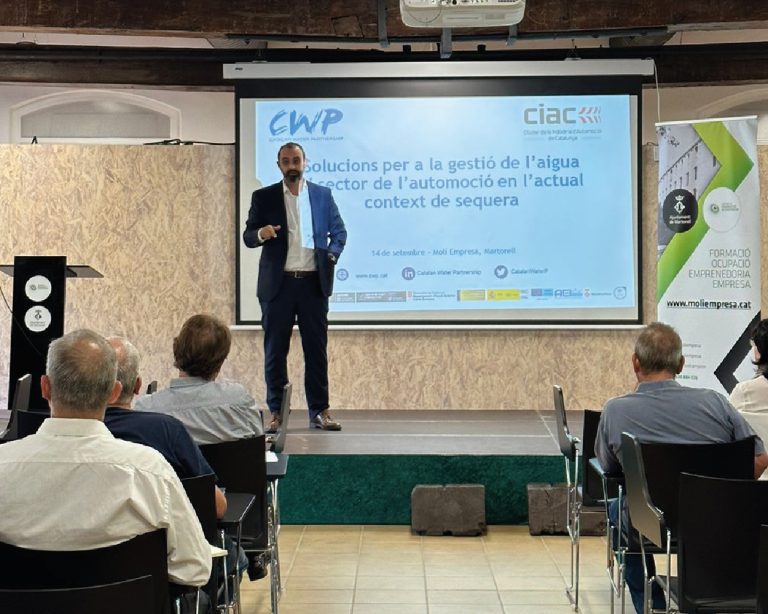
The Catalan Water Partnership promotes innovation and collaboration among the stakeholders involved in water resource management with the goal of improving the sector’s competitiveness in a context increasingly shaped by the effects of climate change, such as growing water stress. In this regard, as highlighted by the cluster’s director, Xavier Amores, during the opening of the event, “The CWP wanted to promote a conference focused on innovative mechanisms such as water credits, which can help companies go beyond productive efficiency and also generate social and environmental benefits for the community, in line with the concept of shared value”.
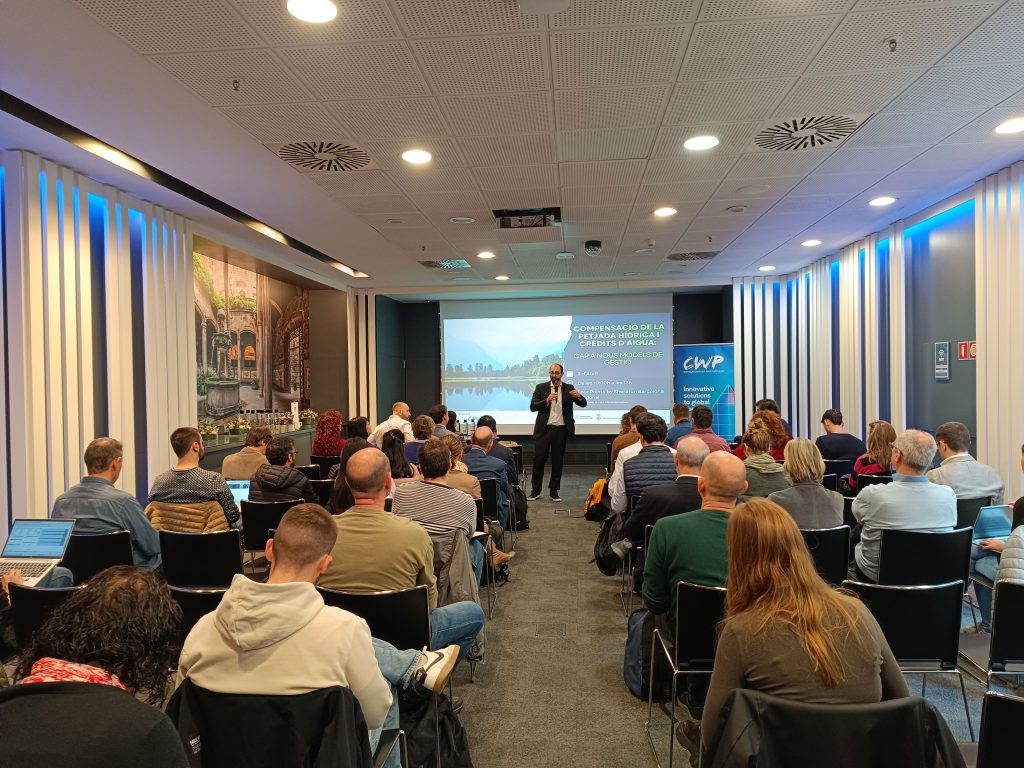
Xavier Amores, director of the CWP
Gabriel Blejman, director and founder of Circa and partner at Aquapositive, opened the session with an introduction to the concept of the water footprint, outlining the main methodologies and international standards used to measure it. He then explained the evolution of the water positive concept, that is, the strategy of going beyond water neutrality by returning more water than is consumed, and how this vision has been consolidated in recent years with the establishment of new benchmark standards.
For her part, Desirée Marin, Director of Innovation at Agbar Catalunya-Balears and President of Act4Water.org, delved into strategies for water footprint compensation, introducing the concept of positive water credits and the associated methodologies for their measurement and certification. She also shared real examples of public-private partnership initiatives, highlighting the role of alliances in generating tangible impacts in the territory.
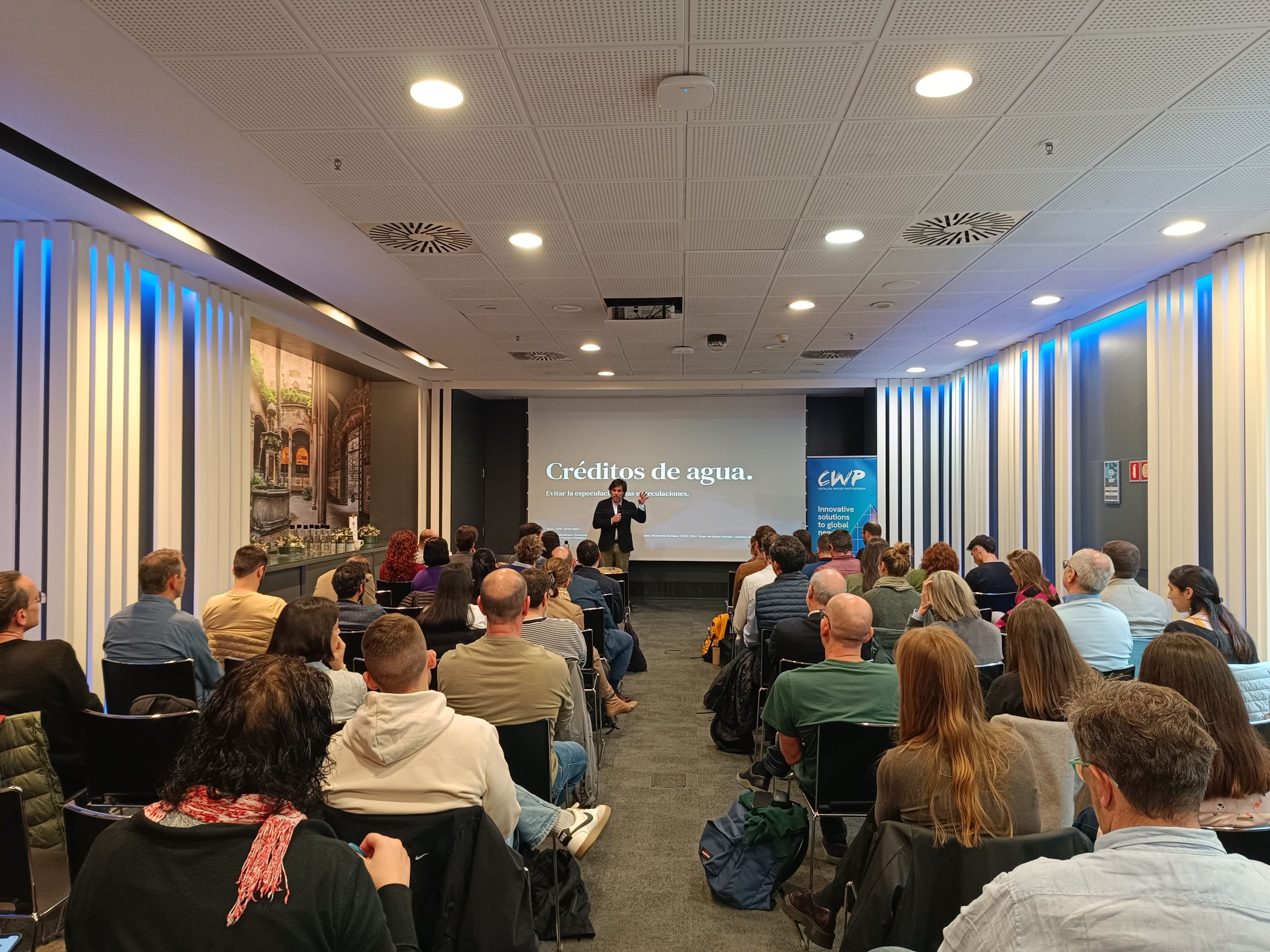
Next, Gonzalo Delacámara, Academic Director and Adjunct Professor at IE University, provided an academic perspective based on international experiences. He explained how private water use and exploitation rights markets operate, presenting examples from countries such as the United States, Chile, and Australia. Delacámara analyzed several emerging initiatives in the field of water credits at a global scale, highlighting both the advantages and the methodological challenges of avoiding speculative practices and ensuring genuine environmental and social returns. Finally, he drew a comparison between water rights markets and water credits, establishing parallels with carbon markets and opening a reflection on the future possibilities of this tool in the local context.
Next, Enric Queralt, Technical Director of CUADLL, presented one of the few practical cases of water footprint compensation currently implemented in Catalonia: the aquifer recharge project through infiltration ponds located in the Llobregat River channel, in Molins de Rei. This initiative, initially co-financed by the European Interreg Sudoe program, has since been expanded in collaboration with Damm and Molins.
For his part, Xavier García, researcher at ICRA-CERCA, presented recent research showing the potential of forest management, and in particular forest thinning, to generate water credits, opening new avenues of synergy between land management and water management.
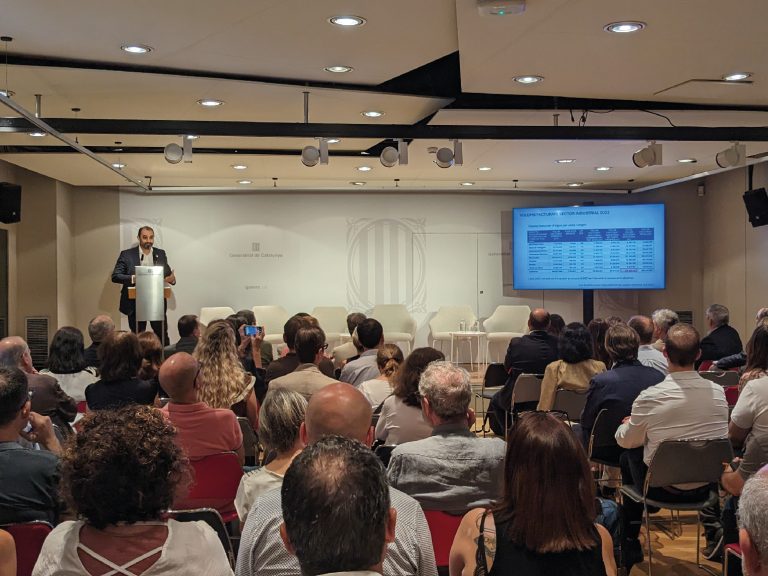
Finally, Jordi Molist, Head of the Water Supply Area at the Catalan Water Agency (ACA), shared some key ideas regarding the upcoming 2027–2032 water planning cycle, providing the public administration’s perspective on the development of these mechanisms and their possible integration into water management policies. With over 80 participants in attendance, the event represented a first step in opening the debate around this innovative and emerging topic, laying the groundwork for future collaborations and developments in the field of water footprint compensation and water credits in Catalonia.