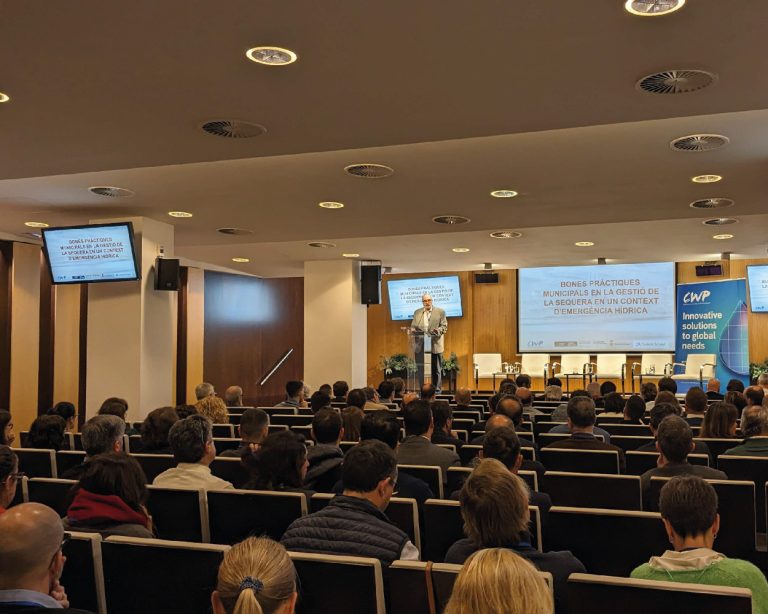
Pending challenges and success stories in water reuse, the main focus of the event organized by the Catalan Water Partnership
The conference, with more than 170 attendees and a special focus on the end users of the resource, had different points of view on the implementation of the new Royal Decree on reuse.
The conference reserved a space for the presentation of success stories on the reuse and recirculation of water by companies and research centres.
16 September, Barcelona – On 16 September, the Catalan Water Partnership organised a conference on the Royal Decree on Reuse at the Palau Macaya in Barcelona with the aim of offering an in-depth analysis of the main developments in the new regulatory framework and a certain assessment one year after its entry into force. with special emphasis on the opportunities for recirculation and reuse, as well as the challenges associated with their implementation. To do this, he divided the session into two parts, the first with presentations on the advantages and limitations of the implementation of the law and the second, where different success stories were presented by companies and research centres.
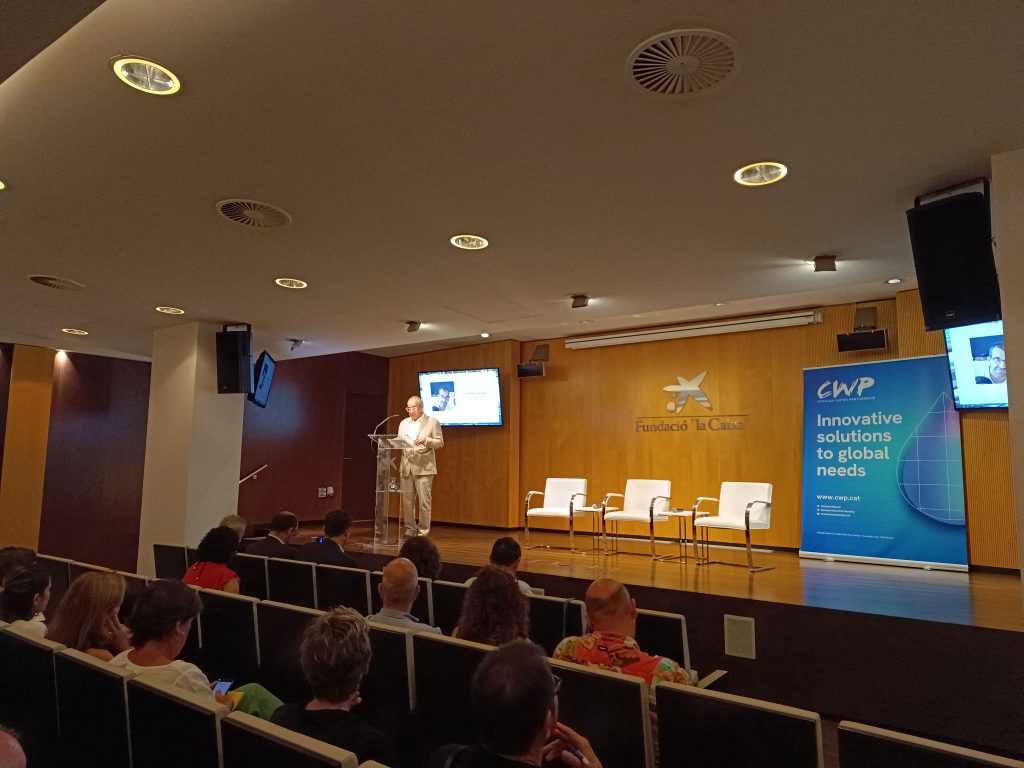
Andreu Iglesias, member of the CWP board, carrying out the welcome.
Andreu Iglesias, member of the board of the Catalan Water Partnership, welcomed the conference, stressing that “the water transition involves incorporating reclaimed water into the supply system: this will allow us to free up natural resources and give solidity to the supply system, but always guaranteeing safety and reliability. Risk management will be critical, and governance, more important than ever.” Then, the first block of the day began with a presentation by Agustina López, head of the service of the Subdirectorate General for Water Protection and Risk Management of the Ministry for the Ecological Transition and the Demographic Challenge. In great detail, he explained the areas of application of the new regulations, as well as the risk management plans and also emphasized that the reuse of treated water is very relevant, since it releases high quality water that can be used in more demanding uses, such as for human consumption, reducing the pressure on water resources, in his speech he wanted to highlight the opportunities of the new RD, but also that there were still cases and situations about which it would be necessary to learn from its deployment. Continuing with a aspect of the application of regulations in the environmental health sector, Irene Corbella, head of the environmental health service of the Public Health Agency of Catalonia, intervened. The speaker presented the preventive measures for public health in the scope of application of the regulations, but also how there were still unresolved points in the current regulations, on which all actors had to work together. Focusing on the application of the regulatory framework in the water sector in Catalonia and its planning, Jordi Molist, director of the water supply area of the Catalan Water Agency, shared keys to the planning of reuse in the territory, with all the forecasts in new ERAs, success stories and how the application of reuse would be different depending on the challenges that exist in each part of the country. This first block concluded with a question and answer session that clarified the public’s doubts.
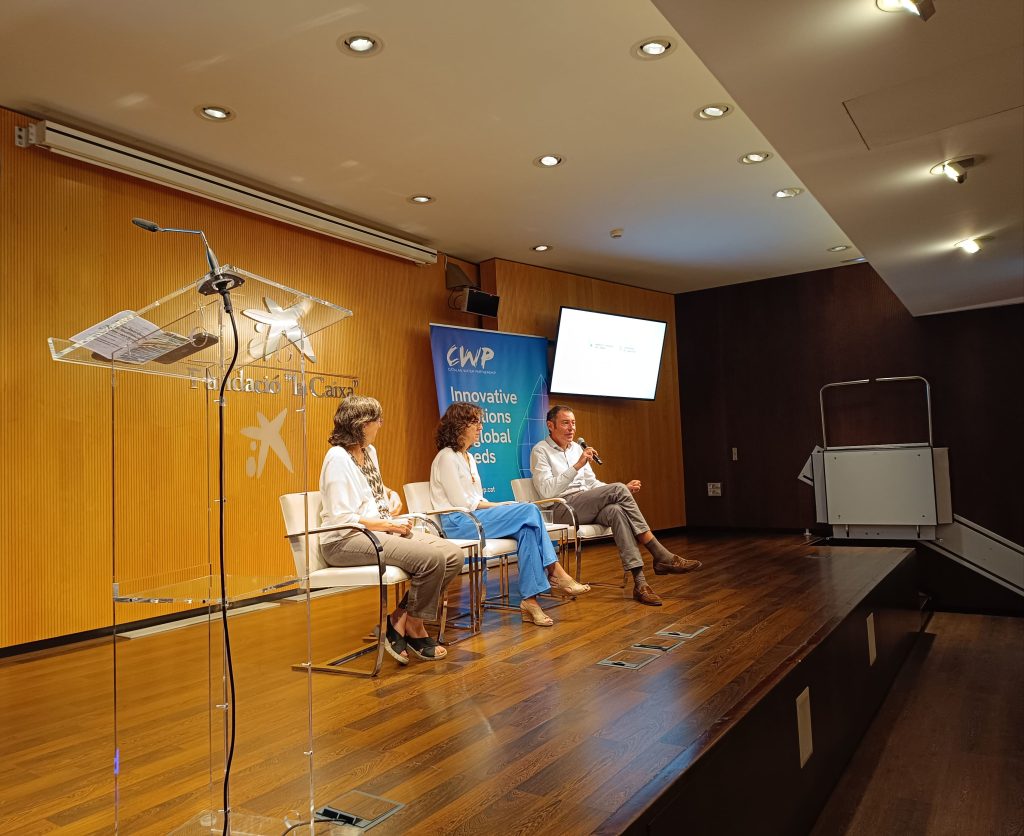
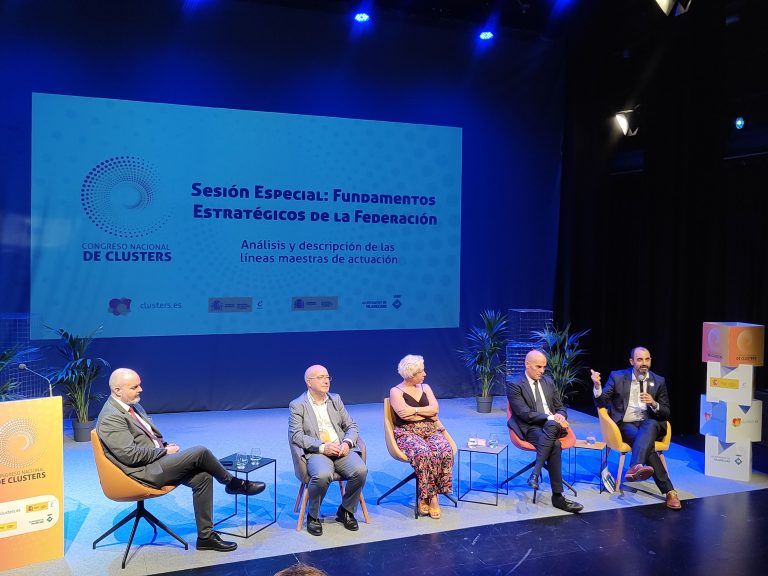
Question time, from left to right: Irene Corbella (Public Health Agency of Catalonia), Agustina López (MITECO), Jordi Molist (Catalan Water Agency)
The second block of the day focused on reuse and recirculation initiatives that have become success stories. Both companies and technology centers participated and shared technologies, strategies and experience in implementation projects with the attendees: Lluís Jordan, CEO of CASSA, presented the success story of reclaimed water in the city of Sabadell. Jordi Oliver, researcher of the water efficiency program at IRTA, highlighted the use of treated urban wastewater as an alternative to rain in vineyard cultivation. Montserrat Batlle, Innovation specialist at ADASA, presented advanced solutions for the control of E.coli in water reuse. Sergi Martí, general director of STENCO, through his experience in different industrial sectors, presented different cases of recirculation and reuse for all types of sectors. Jordi Gabarró, manager of TELWESA, focused on the recovery of valuable products through the reuse of water and experiences that they had carried out in industrial companies. Raül Requena explained how bonÀrea has incorporated sustainability projects and especially in water, both with investments to promote reuse and with R+D projects such as the RE2AQUA. Àlex Galí, coordinator of the Environmental Technologies team at the BETA Technology Centre, presented different success stories of reuse in the agri-food sector from the point of view of R+D. Joana Tobella, director of innovation at Aigües de Barcelona, emphasised the Decideix R +D project funded by the Catalan Water Agency and with the participation of the UPC, ICRA, EURECAT and the CWP referring to direct drinking reuse as a field of study from the point of view of research with a lot of potential. Finally, Marc Fargas, CEO of AITASA, presented the case of the chemical industry in Tarragona and reuse and regeneration as fundamental tools for water resilience and how the economic vector and support for companies is also key to continue promoting reuse in Catalonia.Xavier Amores, director of the Catalan Water Partnership, highlighted at the closing ceremony how the conference had shown progress but also numerous areas to be developed, in which conferences like this help to share knowledge, and promote R+D projects, in fact he wanted to highlight how the CWP has been participating in reuse projects for years, and right now underway projects such as Decideix, RE2AQUA or AQUALOOPS4MED in which we participate or coordinate work on some of the critical challenges for the future of the sector. The conference was attended by 170 people who attended both in person and online and who were able to learn more about the details, effects and opportunities of the new Royal Decree on Reuse from professionals and experts in the field.